Overview of…
4.6 Multizone Systems
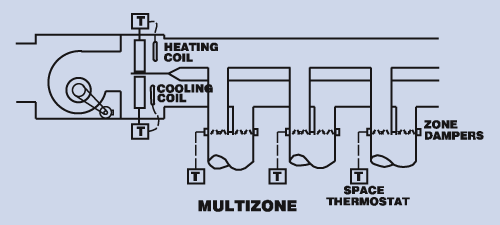
This part of the Energy Efficiency Manual shows you how to save energy in multizone air handling systems. In multizone air handling systems, zone dampers mix heated air from a heating coil and chilled air from a cooling coil to regulate the temperature of a space, or zone. Each zone has a separate duct that extends all the way from the air handling unit. Each pair of zone dampers is controlled by a zone thermostat.
In conventional multizone units, the dampers mix hot and cold air in proportions that keep the flow of mixed air to each zone approximately constant. This can result in an enormous amount of mixing loss if both coils are operating. During low-load conditions, the system may consume much more energy in mixing losses than in conditioning the spaces. Multizone systems are reheating systems, and they have the extreme energy waste that is characteristic of the least efficient types of reheat systems.
Here are energy conservation measures for optimizing the efficiency of multizone systems. By far the largest opportunity for energy conservation in multizone reheat systems is minimizing the mixing of hot and cold air. You can radically reduce air mixing losses by adjusting the discharge temperatures or supply air temperatures of the heating and cooling coils. Automatic supply air temperature reset controls are available to maintain the optimum temperatures. These methods are inexpensive.
Also, you can save both reheat energy and fan energy by adjusting the fan output as the load changes. Several methods are explained, including variable-speed fan drives. In new construction, none of these methods adds much cost, unless the systems are small.
Achieving the highest level of efficiency in existing systems requires major changes. The most effective is conversion to a variable-air-volume or VAV system. You will learn about temperature control, selection of the heating method, selection of terminal units, diffusers, humidity control, ventilation, and other essential design features.
Click here to return to the Table of Contents